Leading Through Continuous Innovation
Discover the keys to a successful safety program and how employees and companies benefit overall.
3 min read
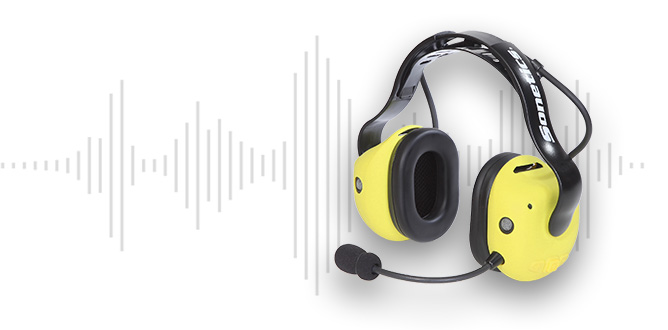
Noise-cancelling headsets have come a long way in the past 30 years, and they provide many advantages for workers who need to communicate in loud environments. Noise-cancelling technology restores the ability to hold a conversation. With distracting sound gone, voices are easier to hear, improving understanding of messages.
We’ve all experienced how workplace noise can make conversation difficult to impossible (don’t get me started on video conferencing). But in the spirit of adaptation, teams have developed a lot of workarounds. You turn off the truck or move away from the compressor in order to hear instructions. You shut down loud equipment for a couple of minutes so you can have a quick face-to-face on what you need to get done.
But there are a couple of problems with those adaptations. First, even if you shut off your equipment, there are likely other sources of noise that you can’t control, like conveyor belts or nearby crews using their own loud machines.
“We’ll just yell,” you reply. “All we need is a minute to get on the same page.” Sure, but if it’s loud enough that you need to yell, chances are that noise is going to interfere with your buddy’s ability to understand your shouted instructions. It will take more time to get your message across.
Often you’ll move closer together to avoid yelling louder, removing your hearing protection devices so you can hear each other. But now you’re exposed to potential hearing damage and to violations of CDC’s social distancing guidelines. And just to pile on a little more, frequent yelling also increases blood pressure.
The days of a quick face-to-face are gone for the immediate future. Since we’re all maintaining at least six feet of distance from coworkers and wearing a mask or face covering, it’s no longer an option to simply step closer to someone and shout to be heard over the noise. And even when you do shout, those face coverings muffle voices enough that any advantage you gained by shouting is lost to the mask.
“Well fine, we’ll just move away from the noise to talk.” But that racks up even more lost time, negatively affecting productivity. It also assumes that you can find a place that’s far enough away from workplace noise that doesn’t hover above OSHA-recommended safety levels. The farther you have to go to find a quiet place to talk, the more time you lose.
What about those jobs that require real-time communication? From crane operations to line pulling, to production floors and hydroexcavation, there are lots of tasks that require your crew to not only work alongside each other, but together, coordinating maneuvers with precision timing.
And all that goes out the window when you can’t hear each other. So what’s the answer to this complex problem? Enter the noise-cancelling headset.
 Noise cancellation: Collisions of opposing sound waves prevent unwanted noise from being heard.
Here’s a very quick primer. Sound travels in waves. A microphone on your noise-cancelling headset receives an incoming sound wave, and electronics inside the headset create its ‘opposite’. The opposing wave is broadcast into the ear dome of the headset just as the outside wave arrives. When the waves collide, that sound is cancelled.
Also called active noise reduction (ANR), this technology works best with constant, low-frequency sound, such as engine or traffic noise. Noise cancellation is less effective at removing high-frequency sound, like the hiss of a pneumatic sprayer. That’s why noise-cancelling microphones are often combined with noise-reduction earmuffs. Put the two together, and you have a noise-cancelling headset.
It’s hard to overstate how game-changing noise-cancelling headsets can be when you’ve been struggling with loud job sites for so long. How does boosting productivity and improving safety sound?
Here are the key advantages that noise-cancelling headsets offer for teams:
These features take an average noise-cancelling headset to the next level, providing an experience that improves audio and boosts safety.
Noise-cancelling headsets improve team communication and productivity. If your team is struggling to be heard, confused by easily misinterpreted hand signals, or walking a country mile to find a quiet place to talk, consider noise-cancelling headsets to get everyone on the same page.
To find out more about Sonetics Wireless Headsets, visit our website or call 800.833.4558.
Discover the keys to a successful safety program and how employees and companies benefit overall.

Situational awareness is key to maintaining a safe work environment. Learn three quick ways to improve yours without damaging your hearing.
There are 3 phrases to remember when maximizing the range of your Sonetics DECT7 wireless communication system: line-of-sight, height and orientation.